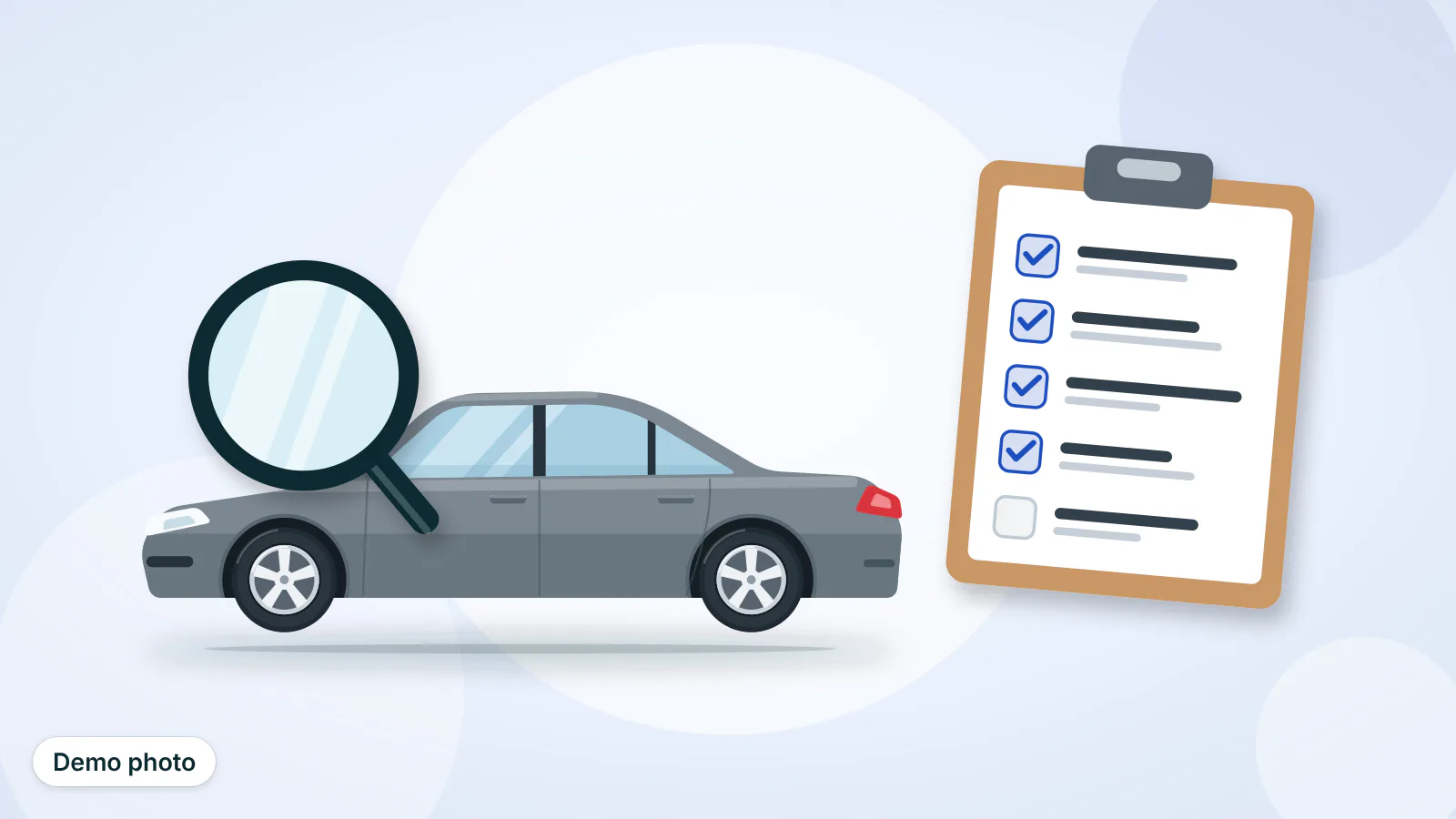
A used car is the second most expensive thing most families buy, and the one where a polished surface hides the most. You do not need to be a mechanic to avoid the worst mistakes. You need an order of work: papers first, then body, then engine, then a proper drive. This checklist follows that order, and ends with when it is worth paying a professional to look.
Step 1: documents, before you look at the car
If the papers are wrong, the condition does not matter. Check these first, and politely leave if they do not add up.
- Registration book or smart card: original, not a photocopy. Match the registration number, engine number and chassis number with the car itself.
- Owner: the name on the registration should match the seller's CNIC. If the seller is not the owner, ask why. Cars sold on an "open letter" are risky: the transfer can become difficult, and you may be buying someone else's problem.
- Online verification: the excise departments run vehicle verification services where you enter the registration number and see the owner, make, model, engine number and token tax status. Use the service of the province where the car is registered.
- Token tax: paid up to date, with receipts. Unpaid years become your bill.
- The file: original sale invoice or import documents, earlier transfer letters and, for a car that was financed, the bank's clearance letter.
- Imported cars: ask for the auction sheet and verify it with an independent service, not with a printout the seller hands you.
Step 2: body and paint
Look at the car in daylight, when it is dry and clean. Avoid inspecting at night or in the rain.
- Stand at each corner and look along the side. Ripples, a slightly different shade or an "orange peel" texture mean that panel has been repainted.
- Check the gaps between panels, around the bonnet, doors and boot. They should be even on both sides.
- Open the bonnet and boot and look at the inner edges and the bolts holding the wings and doors. Scratched or freshly painted bolt heads mean the panel has been off.
- Look at the front structure behind the bumper, the pillars and the boot floor under the carpet for welds, filler or wrinkled metal. Repairs here mean a serious accident.
- Check the chassis number plate for signs of grinding or re-stamping.
- Rust: lower door edges, wheel arches, under the door rubbers and under the car.
- Tyres: uneven wear across the tread points to alignment or suspension problems. Check the spare, the jack and the tools.
"Total genuine" is the most over-used phrase in car ads. A paint thickness gauge settles the question in a few minutes, and professional inspectors carry one.
Step 3: interior and electrics
- Does the wear match the meter? A shiny steering wheel, worn pedals and a sagging driver's seat do not belong to a car showing 40,000 km.
- Turn the key to "on" without starting. All warning lights should come on and then go off after the engine starts. A warning light that never lights may have been disconnected.
- Run the AC for ten minutes. It should cool properly at idle, not only while driving.
- Try every switch: windows, mirrors, central locking, wipers, lights, indicators, horn, infotainment, reverse camera.
- Lift the floor mats and smell the cabin. Damp carpet, a musty smell or mud under the seats can mean flood damage.
Step 4: engine and transmission
Ask the seller not to warm the car up before you arrive. A cold start tells you the most.
- Cold start: it should start promptly and settle to a steady idle.
- Exhaust: blue smoke means the engine is burning oil; thick white smoke that does not clear can mean coolant in the engine; black smoke means too much fuel.
- Under the bonnet: look for oil leaks around the engine, check the oil on the dipstick, and look under the oil filler cap. A creamy sludge there is a bad sign.
- Coolant: the right colour and level, with no oil film on top.
- Noise: tapping, knocking or a whine that rises with the revs all deserve a mechanic's opinion.
- Under the car: fresh drips on the ground where it was parked.
- Hybrids: the hybrid battery is the costly part. Its health can only be judged properly with a diagnostic scan.
Step 5: the test drive
Drive it yourself, for at least fifteen minutes, on a mix of roads, with the stereo off.
- On a straight, level road, loosen your grip briefly. The car should not pull to one side.
- Brake firmly from moderate speed: no pulling, shudder or grinding.
- Go over a few bumps and listen for knocks from the suspension.
- Manual: the clutch should bite in the middle of its travel and the gears should engage without crunching. Automatic: changes should be smooth, without a jerk or a delay.
- Watch the temperature gauge. It should rise to the middle and stay there.
When to get a professional inspection
A checklist finds the obvious. It does not replace a lift, a paint gauge and a diagnostic scanner. Pay for an inspection when:
- the car is a large part of your savings;
- you are not confident judging accident repairs or engine condition;
- it is a hybrid, an import or a car with a lot of electronics;
- anything in the steps above made you unsure, but you still like the car;
- you are buying in another city and cannot spend much time with it.
An inspection costs a small fraction of the car's price, and its report is also a strong tool in negotiation. Our sister site offers this for cars: you can book a car inspection on Car.net.pk and get a written report before you pay. A seller who refuses any independent inspection has told you something important.
Closing the deal
- Agree the price only after the inspection.
- Pay at a bank, by pay order or a transfer both of you can see arrive. Never pay a token to someone you have not met for a car you have not seen.
- Complete the transfer at the excise office with the seller present, including biometric verification where it applies. Do not accept "we will transfer it later".
- Collect everything: both keys, the book or card, the file, token receipts, and a signed sale receipt with CNIC copies.
Ready to look? Browse cars on BUY.net.pk, or see more used cars on Car.net.pk. And read the vehicle section of our safety center before you go.